Industry News

The Data Center Boom Has a Component Problem
Strip away the ribbon cuttings and the renderings, and every data center is a procurement project: transformers, switchgear, power supplies, server boards, cooling controllers and thousands of electronic components that all have to arrive on time, meet spec and stay available for years of operation. When one of those parts disappears, the most ambitious construction program in modern industry stalls at the loading dock.
This is part of the artificial intelligence story, but it’s one that gets far less attention than it deserves. Because right now, everything around those parts is under strain at once.
The buildout itself keeps setting records. The largest technology companies spent more than $400 billion on capital expenditure in 2025, and the International Energy Agency expects that spending to jump another 75% in 2026.The same agency projects global data center electricity consumption will roughly double to 945 terawatt-hours by 2030.
The resistance is setting records too. Community opposition delayed or blocked delayed or blocked at least 75 U.S. data center projects worth about $130 billion in the first quarter of 2026, and more than 100 municipalities have imposed local moratoriums. Tariffs add a third pressure. Section 232 semiconductor tariffs began taking effect in January, 2026. The Computer & Communications Industry Association estimates that a 25% semiconductor tariff applied to data center equipment works out to a 15.6% tax on construction, roughly $90 billion per year in lost investment and GDP.
Those are the headline battles, and they will stay in the headlines. But conversations with engineering, procurement and quality leaders reveal that the fight that actually determines whether facilities and the hardware inside them ship on schedule happens at the component level. Two pressures deserve far more attention than they get: the true financial cost of obsolescence, and the difficulty of qualifying alternate parts.
AI demand is pulling electronic component supply toward hyperscale buyers. Semiconductor lead times reached 40 weeks in March, 2026, and lead times for high-capacity transformers now stretch as long as four years.
A shortage delays a build. Obsolescence forces a permanent decision. Too many teams budget for the two as if they were the same problem, and the difference is expensive. When a manufacturer discontinues a part, every design that depends on it needs a resolution, and each rung of the resolution ladder costs more than the last.
The price tag is well documented. In a March, 2026 survey of 439 engineering and supply chain professionals conducted by Fuld & Company, 85% of respondents across aerospace and defense, electronics, automotive, medical devices and industrial manufacturing reported design rework costs of up to $250,000 per obsolescence event. Run several design programs in parallel and those costs multiply. The parts themselves get pricier too Components that survive only on the secondary market typically sell for 10 to 15 times their original price.
Those figures cover a single component. A data center power system, server board or cooling controller carries hundreds of line items, and each obsolete part triggers its own resolution. Requalification and certification push the totals higher. In aerospace, defense and medical applications, requalifying a system after a redesign frequently costs more than the engineering work itself.
The structural problem is a lifecycle mismatch: Component technology cycles keep shrinking while the systems built on them are expected to run for a decade or more. AI hardware, with its rapid generational turnover, widens that gap further with every product generation. Teams that plan only for shortages are pricing the wrong risk. The budget conversation needs to move from expediting fees to redesign exposure.
Substitution looks like the cheap way out, and the industry leans on it heavily. In one study of obsolescence events on Boeing commercial aircraft, 67% were resolved through part substitution. The economics explain why. What teams underestimate is the burden of proof that comes with every swap: a dual challenge of design and compliance.
On the design side, an alternative must match the original in form, fit and function — electrical parameters, timing, thermal behavior, package footprint and temperature grade. A near-match that misses one parameter fails in qualification, or worse, in the field. Verifying equivalence requires complete, accurate technical data on the original part and every candidate replacement.
On the compliance side, the alternative must independently satisfy RoHS, REACH, and expanding PFAS restrictions, along with customer environmental, social and governance (ESG) requirements and the country-of-origin rules that now determine tariff exposure. A part that meets every electrical spec but fails a compliance check is still the wrong part. Most teams find out late: 62% percent of surveyed professionals discover compliance violations after the design phase, when fixing them costs the most. Every swap restarts the documentation trail.
Shortage conditions add a third hazard: counterfeits. When buyers leave authorized channels to find scarce parts, counterfeiters follow the demand. ERAI, which tracks nonconforming electronic parts, reported a 25% increase in suspect counterfeit and nonconforming parts in 2024, the highest total since 2015. Many were active components already on extended manufacturer lead times, exactly the parts data center supply chains are chasing hardest.
When supply chain and engineering leaders ask how to get ahead of this, the answer starts in the same four places:
Monitor lifecycle status continuously. Most surveyed professionals lack four or more months of visibility into component obsolescence, pricing trends and supply shifts. End-of-life notices carry last-time-buy deadlines, and the cheapest resolutions disappear when those windows close. Quarterly bill of materials reviews are too slow for this market.
Qualify alternatives before you need them. Approving second sources during design costs thousands. Doing the same work during a line-down event costs hundreds of thousands, plus weeks of schedule.
Consolidate component data. Resolution decisions stall when engineering specs sit in one system, compliance certificates in another, and lifecycle forecasts in a third. Decisions this consequential need supply chain intelligence built on accurate, complete component data in one integrated view, where a proposed swap can be checked against specifications, regulations, and sourcing risk at once.
Make it cross-functional. Obsolescence lands on procurement's desk, but the resolution belongs equally to engineering, quality and compliance. Shared data and shared ownership shorten every resolution.
The data center boom will keep straining power grids, community patience and trade policy. No company controls any of that. What a company does control is how early it sees component risk and how fast it acts. The organizations that are expected to come out of this boom strongest are the ones treating obsolescence as a design-stage financial decision, and verifying every alternative against complete data before a line goes down. Everyone else will pay redesign prices.
Source: supplychainbrain.com

RELATED STORIES
.png)
.jpg)
What Is El Niño, and What Does It Mean for Weather, Water, and the Global Economy?
El Niño looks to reach an intensity unpr...
Know More.png)
.png)
The Strait of Hormuz Crisis Is Repricing Freight, Not Just Oil
On September 12, an unidentified vessel was str...
Know More.jpg)
.jpg)
Middle East shipping squeezed as Hormuz and Bab el-Mandeb risks converge
Middle Eastern shipp...
Know More.jpg)
.jpg)
.jpg)
Global trade faces softer demand, tighter capacity
Global manufacturing activity recorded its 12th...
Know More.jpg)
.jpg)
Historic Drought Leaves Europe's Supply Chains High and Dry
As Europe deals with the fallout of record summ...
Know More.jpg)
.jpg)
.jpg)
.jpg)
Global Ship Orderbook Growth Hits Fastest Pace Since Pre-Lehman Boom
At 27% year-on-year,...
Know More.jpg)
Chinese Shipper Launches First Cargo Service Through Arctic
Chinese shipper Sea Legend is starting the...
Know More.jpg)
Reactive Supply Chain Strategies Are No Match for Disruption
Extreme weather events, labor shortages, intern...
Know More.jpg)
.jpg)
.jpg)
.jpg)
Water Levels Along Rhine, Danube Rivers Sink to Record Lows
Europe's Rhine River has fallen to record low l...
Know More.jpg)
The importance of insurance during the supply chain cannot be ignored.
For decades, cargo criminals followed a familia...
Know More.jpg)

Iran Demands Crew, Cargo Details to Allow Ships Through Hormuz - SupplyChainBrain
Vessels seeking to transit the Strait of Hormuz...
Know More
Iran War Threatens Global Food Supply Chains - SupplyChainBrain
While the Iran war's impact on oil prices has c...
Know More
Maersk Adjusts Emergency Contingency Surcharges Amid Regional Disruptions - SeasNews
Maersk has announced adjustments to its Emergen...
Know More
Container rates climb after weeks of decline - Shipping Watch
The price of container freight from Shanghai to...
Know More
Trump’s Maritime Golden Age could prove costly for shipping - Seatrade-Maritime
With the USTR fees on Chinese built and owned v...
Know More
Yard Bottlenecks Ripple Through Supply Chains in 2026 - SupplyChainBrain
Once an afterthought in supply chain strategy, ...
Know More
MENA set to lead global sustainable aviation fuel market - Technical Review Middle East
The Middle East and North Africa (MENA) region ...
Know More
The New Economics of Warehousing: Flexibility Over Footprint - SupplyChainBrain
The warehousing landscape is undergoing a quiet...
Know More
Retail giants back first e-ammonia boxship - splash247
The Zero Emission Maritime Buyers Alliance (ZEM...
Know More
Shipping lines gear up for post-Red Sea crisis restructure - SeaTrade Maritime
Seatrade Maritime News and MDS Transmodal exami...
Know More
What Peak Season 2024 Taught Us About the New Rules of Holiday Shipping - SupplyChainBrain
Last year’s peak season proved what many ...
Know More
Welcome to the age of uncertainty - splash247
The opening Big Issues session of the Maritime ...
Know More
Jebel Ali Port breaks nine-year record for container volume in July on Cepa deals - The National News
DP World’s Jebel Ali Port has reported it...
Know More
Box rates rates sink to lowest levels since Red Sea crisis - Splash247
Container freight rates are sliding further, wi...
Know More
UN: Trade reset, geopolitics to hurt container trade growth - FreightWaves
Maritime trade is entering a period of fragile ...
Know More
Carriers reroute fleets to sidestep US levy - splash247
Global shipping is realigning fleets in anticip...
Know More
EU Takes Aim at Shein and Temu Over Flood of Unsafe Products - SupplyChainBrain
EU Justice Commissioner Michael McGrath is vowi...
Know More
Second half air cargo volumes depend on market diversification - Air Cargo News
Air cargo demand growth is present outside of t...
Know More
Up to Dhs500,000 fine for firms circumventing Emiratisation targets: Ministry - gulftoday.ae
The Ministry of Human Resources and Emiratisati...
Know More
Shipping in wait-and-see mode as Iran and Israel conflict continues - lloydslist.com
TANKER rates remain elevated, along with the fo...
Know More
Container freight rates fall but Red Sea return will be tipping point - seatrade-maritime.com
The Drewry World Container Index (WCI) shed a f...
Know More
AD Ports Group Opens First Inland Dry Port Facility in Abu Dhabi - transportandlogisticsme.com
AD Ports Group has announced the inaugu...
Know More
Carriers cautious on return to Red Sea as Houthis say they will end attacks - FreightWaves.com
Yemen’s Houthi rebels said they will ceas...
Know More
Have carriers failed to adjust to a new normal? - Seatrade-Maritime
Liner shipping operators are failing to act on ...
Know More
Shippers warned to ensure contingency plans are in place ahead of a potential strike at US East Coast and Gulf Coast ports next week - Container News
Transportation and logistics providers, port op...
Know More
Ships Fleeing the Red Sea Now Face Perilous African Weather - SupplyChainBrain
Ships sailing around the southern tip of Africa...
Know More
The U.S.-China Trade War Heats Up, And Businesses Move to Adjust - -SupplyChainBrain
The “quiet” trade war that has been...
Know More
More ships and more containers needed for 'feverish' box shipping sector - The Loadstar
Supply in container shipping has become “...
Know More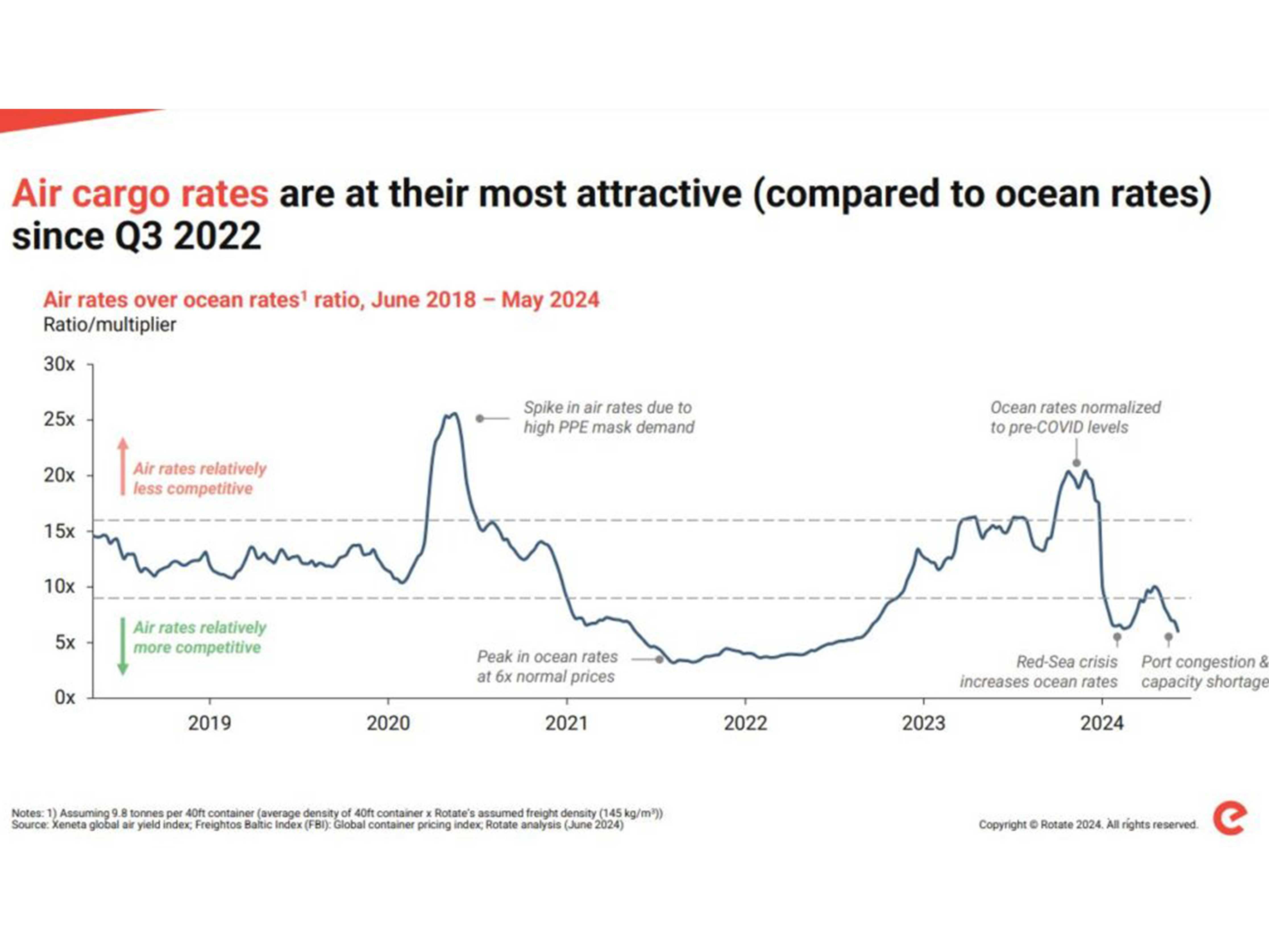
Ocean and airfreight rate differential narrows - Air Cargo News
The difference between ocean and airfreight rat...
Know More
US Demand For Goods From 2 Chinese Firms Sends Air Cargo Rates Soaring - NDTV
Two Chinese companies have turned the global ai...
Know More
Mounting container shortages creating 'total havoc' - The Loadstar
Containers out of northern China are becoming i...
Know More
11,100 new slots a day: April smashes records for liner deliveries - Splash247
The teu tsunami coming out of Asian yards shows...
Know More
Mixed signals on container freight rates as Red Sea alarm subsides - Seatrade Maritime
Linerlytica, however, reported this week that &...
Know More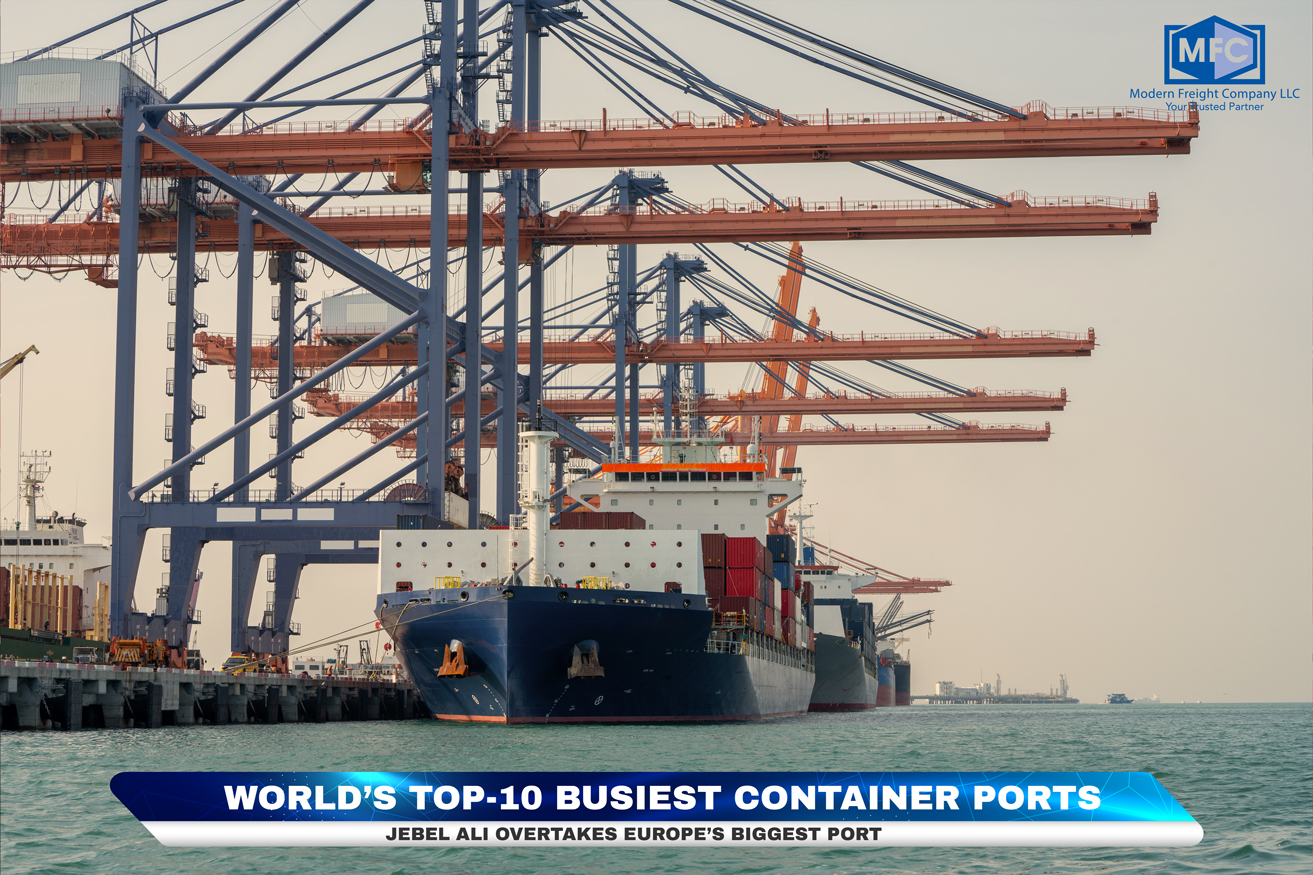
Jebel Ali returns to top-10 busiest container ports - Container News
Alphaliner's report said the Middle East’...
Know More
The Evolution of Physical Security Technology in the Supply Chain Industry - SupplyChainBrain
The seamless operation of supply chains, which ...
Know More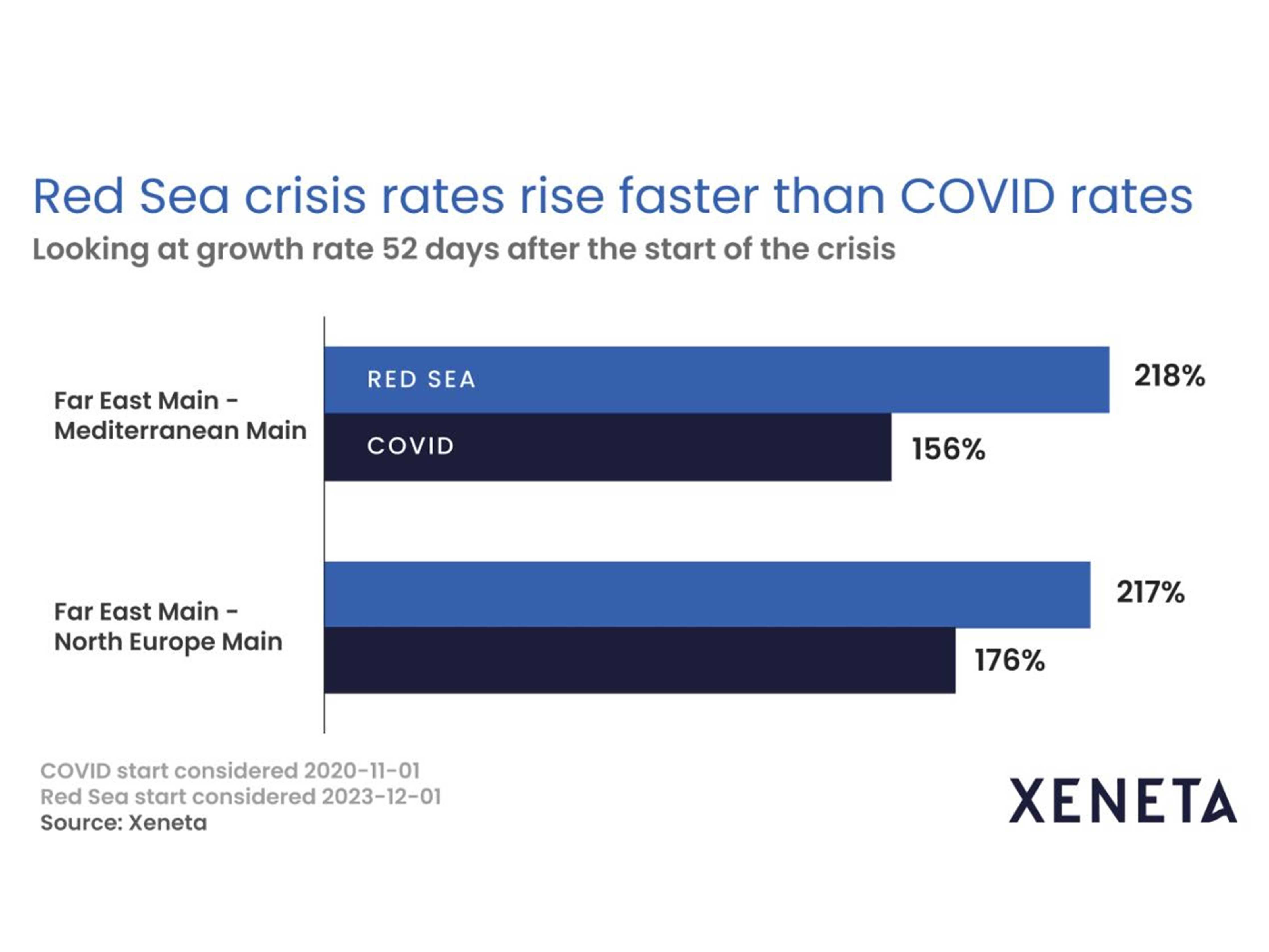
Red Sea crisis impact on box rates more rapid than Covid-19 - Asean Lines
The Red Sea crisis has seen ocean freight rates...
Know More
Freight crime on the up as gangs become more tech-savvy - The Loadstar
Internet-enabled crime and insider involvement ...
Know More
High demand, low supply: Dubai faces warehouse shortage amid new business influx - Logistics Middle East
Dubai is facing a shortage of warehouse space, ...
Know More
VGM container weight mis-declaration 'rampant at most ports', say forwarders - The Loadstar
Container carriers are dealing with widespread ...
Know More
CMA CGM announces overweight surcharge from Middle East Gulf to Europe and Mediterrannean - Container News
CMA CGM announced it will implement a new overw...
Know More
Bleak outlook for box trades as demand weakens prior to Golden Week - The Loadstar
Export bookings leading up to China’s Gol...
Know More
Ship queue grows at both ends of Panama Canal and congestion builds - The Loadstar
Draught limits on vessels seeking passage throu...
Know More
Over 60% of Logistics Companies Are Investing in Supply Chain Management Systems-SupplyChainBrain
Almost two-thirds of logistics companies (64%) ...
Know More
Growing India-UAE trade flows to benefit from domestic currency invoicing - The Loadstar
After a free trade deal last year, India and th...
Know More
Air cargo market still weakening while players search for optimism - The Loadstar
News that airlines are starting to park some fr...
Know More
Box rates to Gulf and S America rise as Asia-Europe/US prices falter - The Loadstar
Container freight rates from China to ’em...
Know More
Up to Dh5,000 fine for owners of some vehicles who fail to register in tracking system before October 30 - Khaleej Times
The Federal Authority for Identity, Citizenship...
Know More
Plot a (positive) course for air freight rates...if you dare - The Loadstar
Amidst the economic doom and gloom, with claims...
Know More
Imports Continue Slow Climb Despite Cuts in 2023 Forecast - The Maritime Executive
The Global Port Tracker has not yet forecast th...
Know More
Some ocean trades stabilising, but transatlantic rates still falling - The Loadstar
Container spot rates from North Europe to the U...
Know More
UAE announces fees on international imports in 2023 - Arabian News
The UAE is set to introduce new import rules, s...
Know More
China's Lockdowns are Over, but its Shipping Outlook is Still Mixed- The Maritime Executive
Beijing’s on-and-off COVID lockdowns crea...
Know More
Ocean carriers plan to blank half their sailings from Asia, post-CNY - The Loadstar
Against a background of extremely weak demand f...
Know More
Airfreight loses as shippers switch to cheaper ocean routes to save costs - The Loadstar
Shippers are merrily switching modes, back to s...
Know More
Protests at China lockdowns spread, with supply chains looking vulnerable again - The Loadstar
Anti-lockdown protests have broken out across m...
Know More
Air cargo peak season evaporates on low demand, higher capacity
It’s the time of year when retailers typi...
Know More
Black Sea ro-ro operations adapt to the new normal as companies seek opportunities - The Load Star
War in Ukraine has forced the re-routing of car...
Know More
Port of Felixstowe strike could see air cargo demand rise further: Air Cargo News
Strike action at the UK’s biggest contain...
Know More
Why container ships probably won't get bigger: BBC
When the Ever Ace, one of the largest container...
Know More
Consumers Prefer Personal Touch, Predictability, Over Super-Fast Delivery
To successfully ride the bucking growth of e-co...
Know More
Air freight 'turned upside down' as capacity slumps and rates climb
Air freight capacity has indeed shrunk, accordi...
Know More
Robotics in Warehouses- Enabling smarter and more cost-efficient logistics
Warehouses are the heart of supply chains and a...
Know More
DP World reports strong volume growth of 17.1% in 2Q 2021
DP World Limited handled 19.7 million TEU (twen...
Know More
Maersk to redesign its ocean network in West & Central Asia
Maersk is redesigning its ocean network in West...
Know More
DP World acquiring Imperial Logistics for $890m expanding Africa footprint
DP World has announced an offer to acquire Sout...
Know More
Secondhand Containership Market Heats up in 2021 driven by demand
Skyrocketing container shipping freight rates a...
Know More
DP World acquires leading US-based supply chain solutions provider - GCC Ports
DP World announces the acquisition of 100 per c...
Know More
Hapag-Lloyd and ONE join Maersk’s blockchain platform
Two of the largest container carriers in the wo...
Know More
Hapag-Lloyd to provide full transparency on vessel arrivals.
With this initiative on schedule reliability, H...
Know More
Just when you think shipping costs can’t go higher, increasing fuel cost are going to push prices up for shippers.
The price of Brent crude topped $72 per barrel ...
Know More
Port of Shenzhen faces severe congestion: container-news.com
The congestion at the Port of Shenzhen, China, ...
Know More
Hapag-Lloyd further expands its container fleet: 60,000 TEU of standard containers ordered- gccports.com
The sharp increase in demand has led to a short...
Know More
Globally, container manufacturing is controlled by three companies. Here is an insight into how this is impacting the global supply chain.
Never before has the humble ocean shipping cont...
Know More
UAE to allow investors full ownership of companies from June 1 - Khaleej Times
The landmark reform was originally slated to ro...
Know More
Logistics Passport: A game-changer for Dubai trade.
The WLP will be playing an instrumental role in...
Know More
Desperate shippers swallow contract rates at double 2020 Levels - container-news.com
Early indications from the annual contract nego...
Know More
Volatility in the shipping market likely to continue till Q4 - Sea Trade Maritime News
In a trading update for Q1 2021 Maersk signific...
Know More
UAE economy performs better than expected, on track towards recovery in 2021 - Khaleej Times
The UAE economy performed better than expected ...
Know More
2020 – A year of remarkable turnaround for container shipping
Due to the change in shopper behavior during th...
Know More
2021 Trends In Retail Automation And Store Supply Chains
Some container vessels have been sailing from A...
Know More
Container shortages the biggest disrupter: where are all the empty boxes?
Some container vessels have been sailing from A...
Know More